soaker (ofuro) tub
japanese soaking tubs (ofuro) are designed around a different purpose than Western bathtubs.
They’re built for deep, quiet immersion and ritual relaxation rather than quick washing.
Deeper immersion = better muscle relaxation
Japanese tubs are: Shorter, Deep, Often with a built-in seat
You sit upright and the water comes up to your shoulders.
Full-body immersion increases hydrostatic pressure on the body, which:
Improves circulation, Reduces swelling, Relaxes muscles more effectively, Eases joint pain
It’s closer to hydrotherapy than casual bathing.
Heat retention
Traditional materials (like hinoki wood) and modern insulated versions are designed to:
Keep water hot longer. Maintain consistent temperature
In Japan, bathing is about soaking in very hot water (often 40–42°C / 104–108°F), which deeply relaxes the nervous system.
Space efficiency
Because they’re upright and compact, they:
Fit in smaller bathrooms, Use less floor space, Often use less water than long Western tubs
This makes them surprisingly practical.
Separation of washing and soaking
In traditional Japanese homes:
You wash thoroughly outside the tub first, The tub is for soaking only
This keeps the water clean and makes it feel more like a shared spa experience.
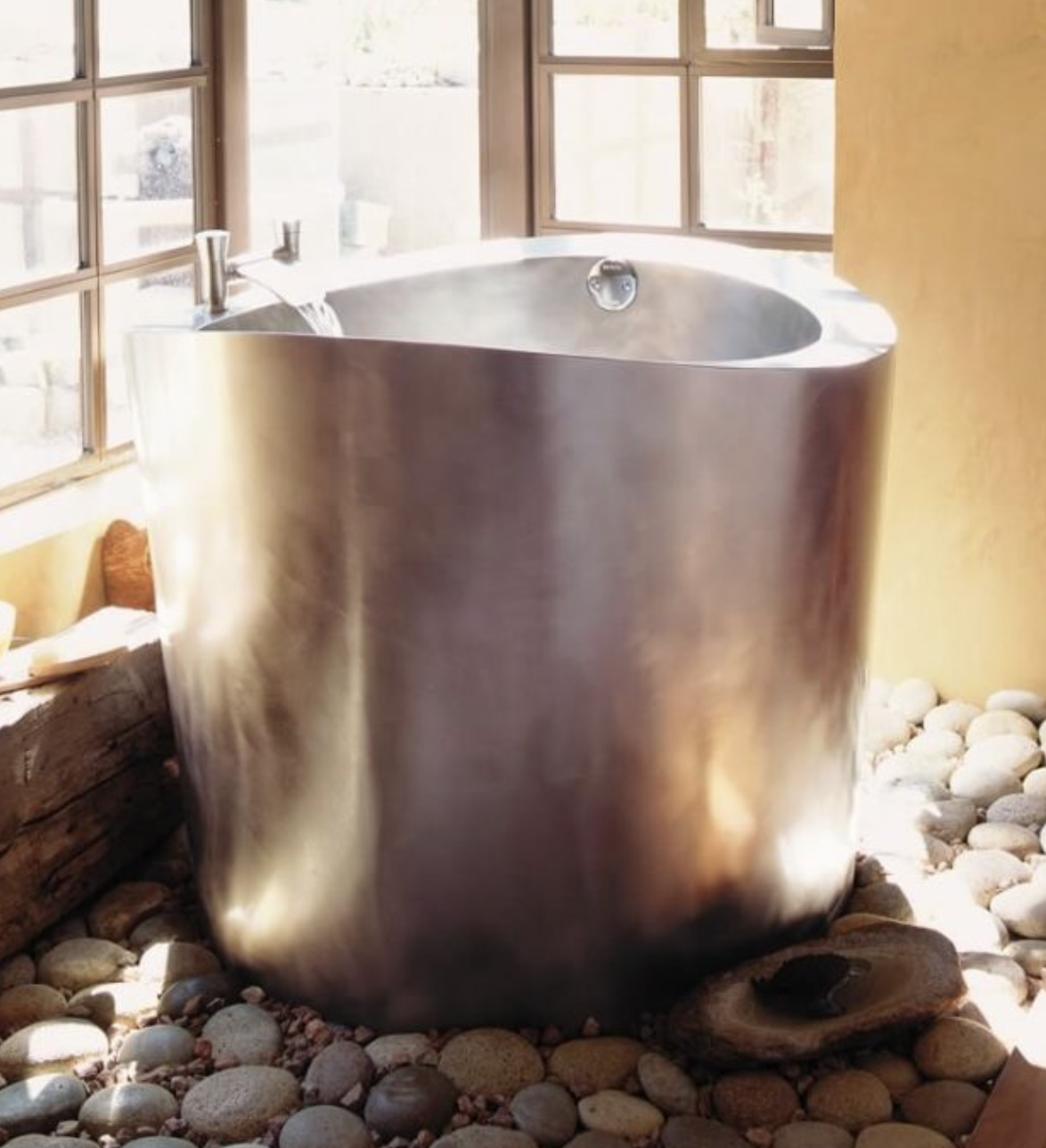
diamond spas tubs and pools
5. Psychological ritual
The biggest benefit may be mental:
It’s intentional, It’s quiet, It slows you down
The act of sitting immersed up to the shoulders signals the body to shift into parasympathetic mode (rest-and-digest). Many people report better sleep after regular soaking.
6. Posture comfort
Because you sit upright instead of reclining awkwardly:
Less neck strain, More natural spinal alignment, Easier breathing in deep water
Are there downsides?
You can’t stretch out fully like in a Western tub.
Deep hot water isn’t ideal for people with certain heart conditions.
Installation can require reinforced flooring (they’re heavy when filled).
Japanese tub:
· You sit upright
· Water to shoulders
· Feels immersive and grounding
· More meditative
· Closer to hydrotherapy
Conventional:
· Reclined position
· Often less deep
· More casual / less ritualistic