andrea palladio and the importance of proportions in the interiors
Andrea Palladio (1508–1580) was one of the most influential architects of the Renaissance, whose ideas continue to shape Western architecture and interior design.
Working primarily in the Veneto region of Italy, Palladio drew inspiration from classical Roman architecture and the writings of Vitruvius, emphasizing harmony, clarity, and mathematical order.
Central to Palladio’s philosophy was the concept of proportion — the idea that beauty arises from balanced, measurable relationships between parts of a structure.
In his seminal work, I quattro libri dell'architettura (The Four Books of Architecture), he outlined precise ratios for room dimensions, ceiling heights, and spatial sequences.
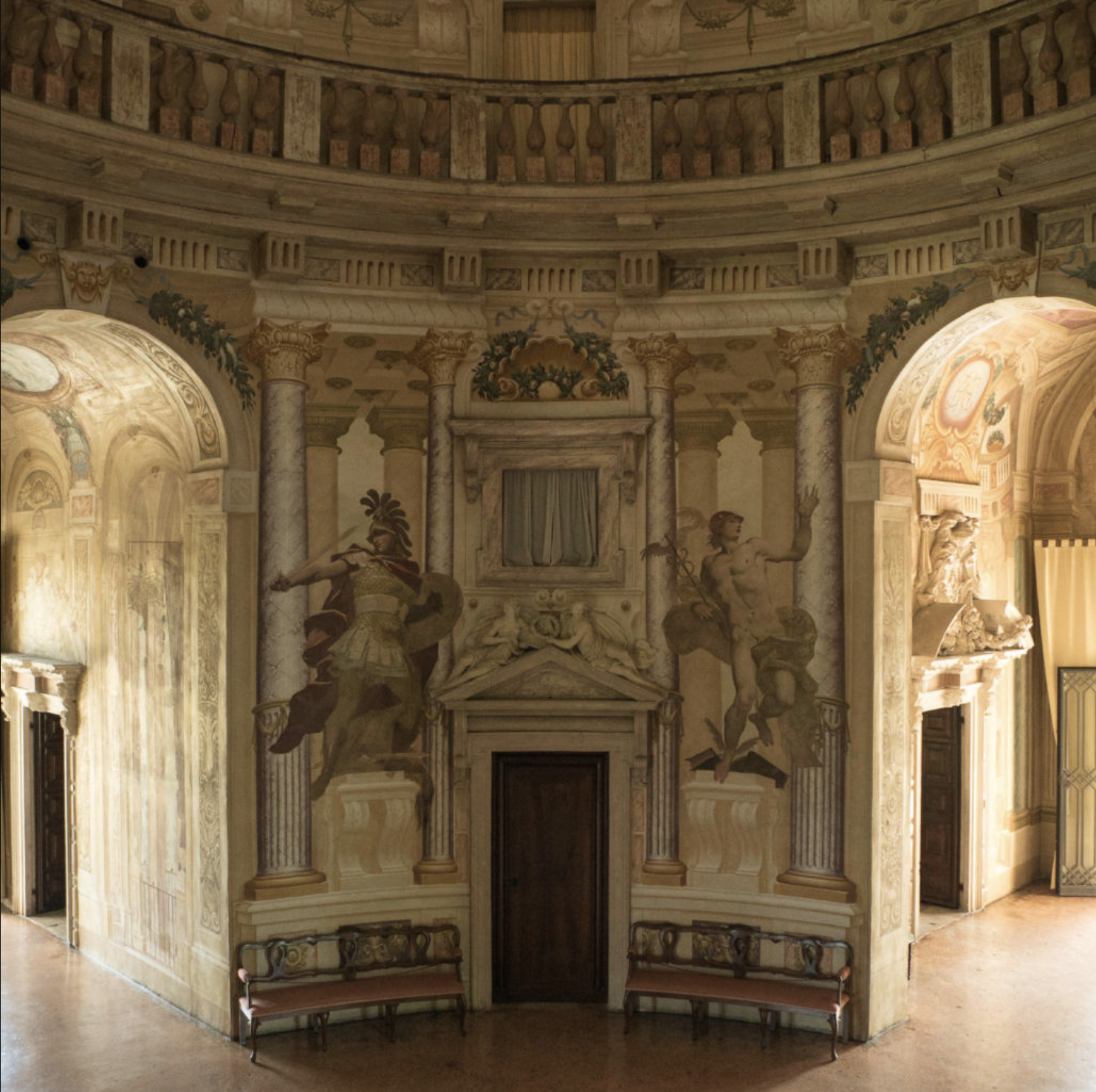
interior of la rotonda
Palladio believed that rooms should relate to one another through simple mathematical ratios (such as 1:1, 1:2, or 2:3), creating visual harmony and a sense of calm.
In interiors, this meant that:
Ceiling height corresponded proportionally to room width and length
Openings (doors and windows) aligned symmetrically
Decorative elements reinforced structural balance rather than obscured it
The result is spaces that feel orderly, serene, and inherently “right” — even if the viewer cannot immediately explain why. Palladian interiors avoid excess; their elegance derives from proportion rather than ornament.
His principles influenced centuries of architecture across Europe and beyond, shaping neoclassical design and the interiors of grand houses, civic buildings, and palaces.
The enduring lesson of Palladio is that proportion is not merely mathematical — it is emotional.
Balanced space produces psychological equilibrium.
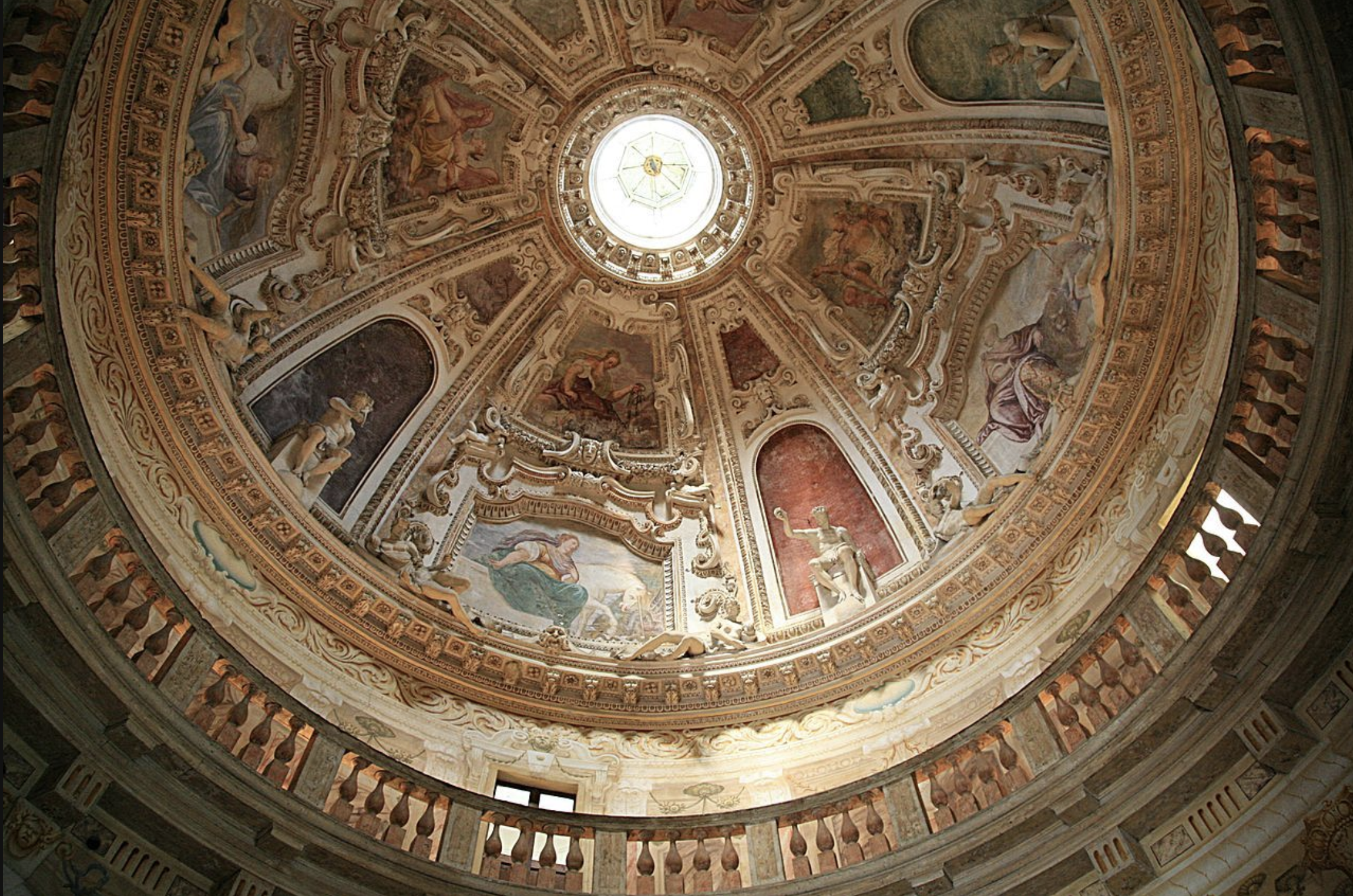
la rotunda
Renaissance humanism linked architectural harmony to cosmic and bodily harmony.
The building was conceived as an ordered organism, reflecting universal mathematical laws. As a result, proportional interiors were understood to generate perceptual balance, intellectual clarity, and even moral order.
Palladio’s proportional principles influenced Neoclassicism across Europe and shaped the spatial logic of Enlightenment architecture.
His integration of harmonic geometry with domestic planning established a lasting paradigm in which interior proportion became synonymous with architectural refinement.